
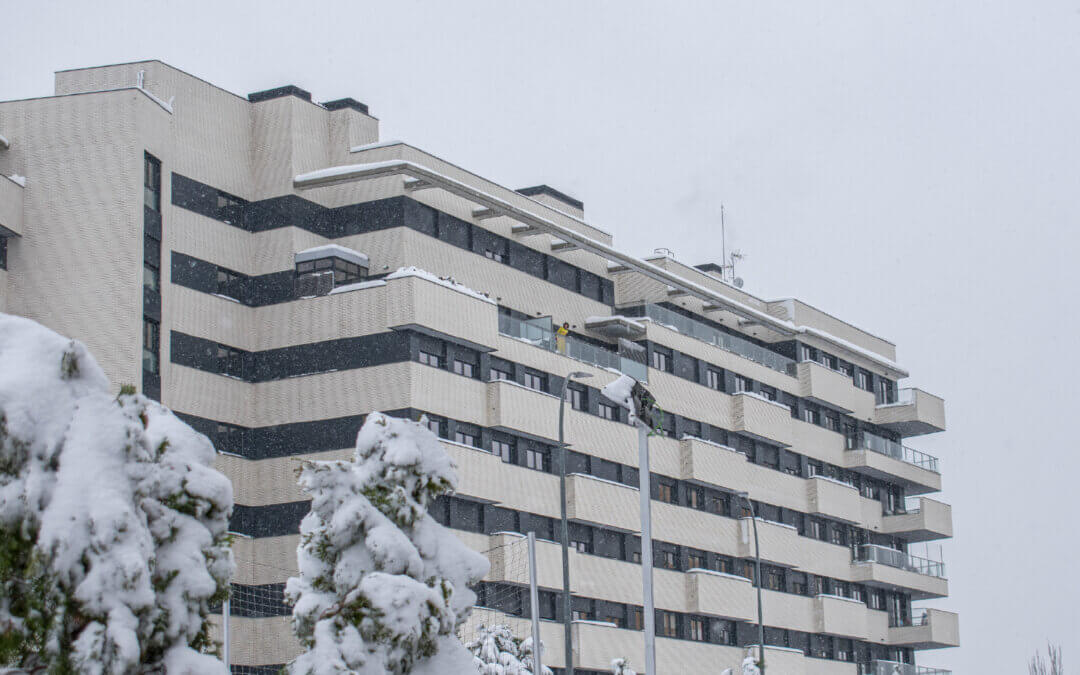
Commercial roof membranes (the flexible, waterproof sheet material installed on flat or low-slope roofs) are built to be durable, but even the toughest roofing systems are constantly exposed to the elements, which eventually causes wear and tear. And one of the biggest factors affecting your commercial roof membrane is temperature fluctuation. Daily highs and lows, seasonal shifts, and extreme weather all put stress on your roof, which can shorten its lifespan if not properly managed.
Understanding how temperature swings impact your commercial roof membrane can help you spot problems early and plan maintenance accordingly.
1. Expansion and Contraction
Roof membranes expand when temperatures rise and contract when temperatures drop. This movement is natural, and roofs are designed to handle it to an extent, but over time, it can take a toll.
When temperature swings are frequent or extreme, they can:
- Put stress on seams and flashing
- Loosen fasteners or adhesives
- Create small gaps in the membrane that allow moisture intrusion
Eventually, these minor issues can develop into leaks or widespread membrane issues if left unaddressed.
2. Cold Weather Risks
In colder temperatures, many roofing membranes become less flexible. As the roofing materials stiffen, the membrane is more vulnerable to:
- Cracking
- Splitting at the seams
- Sustaining damage from foot traffic or snow removal
Sudden cold snaps are especially hard on aging roof membranes, which may have already lost some of their elasticity. Additionally, if water has penetrated the system and freezes, it can expand and worsen existing damage.
3. Heat and UV Exposure
High temperatures and prolonged sun exposure bring another set of challenges. Heat causes membranes to soften and expand, while ultraviolet (UV) rays slowly degrade the material’s surface.
Common heat-related issues include:
- Accelerated aging of the membrane
- Surface blistering or bubbling
- Breakdown of protective coatings
Over time, UV damage can make the membrane brittle, reducing its ability to withstand future temperature extremes and swings.
4. Seam and Adhesive Failure
Seams are often the most vulnerable part of a commercial roofing system. As temperatures fluctuate, the repeated movement can weaken welded seams or adhesive bonds.
If seams begin to separate, even slightly, water can enter the roofing system and compromise a building’s insulation, decking, and interior. Routine inspections are key to catching seam issues before they escalate.
5. Moisture Intrusion and Condensation
Temperature differences between the inside and outside of a building can also lead to condensation within the roofing system. Trapped moisture reduces insulation efficiency and increases the risk of mold, rot, and ultimately, structural damage.
This is especially common in buildings with:
- Inadequate ventilation
- Aging insulation
- Existing membrane damage
How to Protect Your Commercial Roof
While temperature swings are out of your control, their impact on your roof membrane doesn’t have to be. Proactive maintenance goes a long way.
To protect your commercial roof:
- Schedule regular professional inspections
- Address small issues before they worsen
- Keep drains and roof surfaces clear
- Consider reflective coatings to reduce heat absorption
Working with an experienced commercial roofing company ensures that your roof is installed and maintained with local climate conditions in mind.
Partner with Farha Roofing
At Farha Roofing, we understand how temperature extremes affect commercial roofing systems, and we know how to prevent costly damage. Our team provides thorough inspections, expert repairs, and long-term solutions tailored to your building’s needs.
If you’re concerned about how temperature swings may be impacting your commercial roof membrane, contact Farha Roofing today to schedule a free inspection and protect your roof for years to come.
Recent Comments